
Gate Valve
- Home
- / Products
- / Valves
- / Gate Valve
KSF Valves Pvt. Ltd.
Gate Valves
Gate valves are a type of valve commonly used to control the flow of fluids in a piping system. Gate valves are named for the gate-shaped wedge that moves perpendicular to the flow of the fluid to control the flow. When the valve is fully open, the gate is lifted completely out of the fluid path, minimizing flow restriction.
Gate valves operate by raising or lowering a gate (usually made of metal) to either allow or stop the flow of fluid. The gate is moved by a threaded stem that is turned by a handwheel or actuator. Gate valves are typically either fully open or fully closed, offering minimal restriction to flow when open.
There are four main types of gate valves :
- Forged Steel Gate Valves
- Bellow Sealed Gate Valve
- Pressure Seal Gate Valves
- Knife Gate Valves

Applications:
Gate valves are commonly used in applications where a straight-line flow of fluid with minimum restriction is desired, such as in water supply systems, oil and gas pipelines, wastewater treatment plants, and industrial processes. They are suitable for both on/off and throttling (partially open) applications.
Maintenance:
Regular maintenance is essential to ensure the proper functioning of gate valves. This may include lubrication of the stem, inspection of the gate and seat for wear or damage, and cleaning of the valve internals.
Specifications
| Design Standards : | BS 1414, API 600, ASME B16.34 |
|---|---|
| Testing Standards : | BS 5146, API 598 |
| Size Ranges : | ½”-36″ (DN15-DN900) |
| Class : | 150-2500 |
| Material of Construction: | WCB, WCC, WC6, WC9, C5, C12, LCB,LCC, CF8, CF8M, etc. |
| Seat: | A105+13%Cr, A105+Steelited. |
| Trim: | API No 1 to 16. |
| Face to Face: | As per ASME B16.10 |
| Actuation: | Manual, Gear, etc. |
| End Connection: | ANSI B16.5(Raised Flanged), ANSI B16.25(Butt Weld) |
KSF Valves Pvt. Ltd.
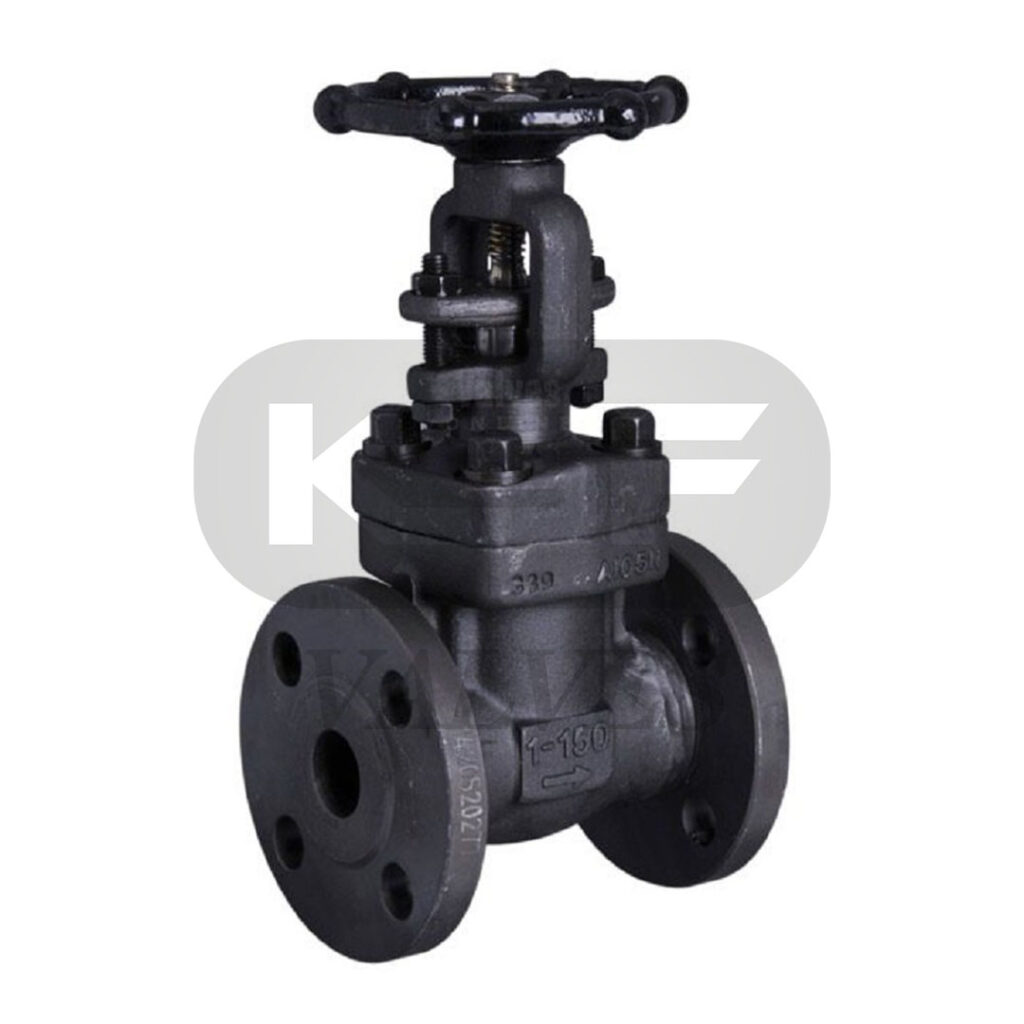
Forged Steel Gate Valves
Forged gate valves are compact, high-strength valves designed for high-pressure and high-temperature applications. Made from premium forged steel, they offer excellent sealing, durability, and reliability in demanding services such as oil and gas, power, and petrochemical industries.
Design and Construction:
• Forged steel gate valves are typically constructed using forged steel materials for the body and bonnet, providing strength and durability in demanding conditions.
• They feature a wedge-shaped gate that moves up and down to control the flow of fluids. The gate is guided by the valve body and seats against the valve seats to provide a tight seal when closed.
• Bonnets are usually bolted or threaded to the body for ease of maintenance and repair.
Materials of Construction:
• Body and bonnet materials: Forged steel gate valves are commonly made from materials such as carbon steel (ASTM A105), alloy steel (ASTM A182 F11, F22), or stainless steel (ASTM A182 F316, F316L) to withstand high-pressure and high-temperature conditions.
• Gate and seat materials: Gate valves may have gates and seats made of materials like stainless steel, carbon steel, or special alloys to provide corrosion resistance and wear resistance.
Standards and Certifications:
• Forged steel gate valves are designed and manufactured in accordance with industry standards such as API 602 (for compact steel gate valves), ASME B16.34 (for valves), and API 598 (for valve inspection and testing).
• They may also comply with various international standards and certifications, depending on the application requirements and the region of use.
KSF Valves Pvt. Ltd.
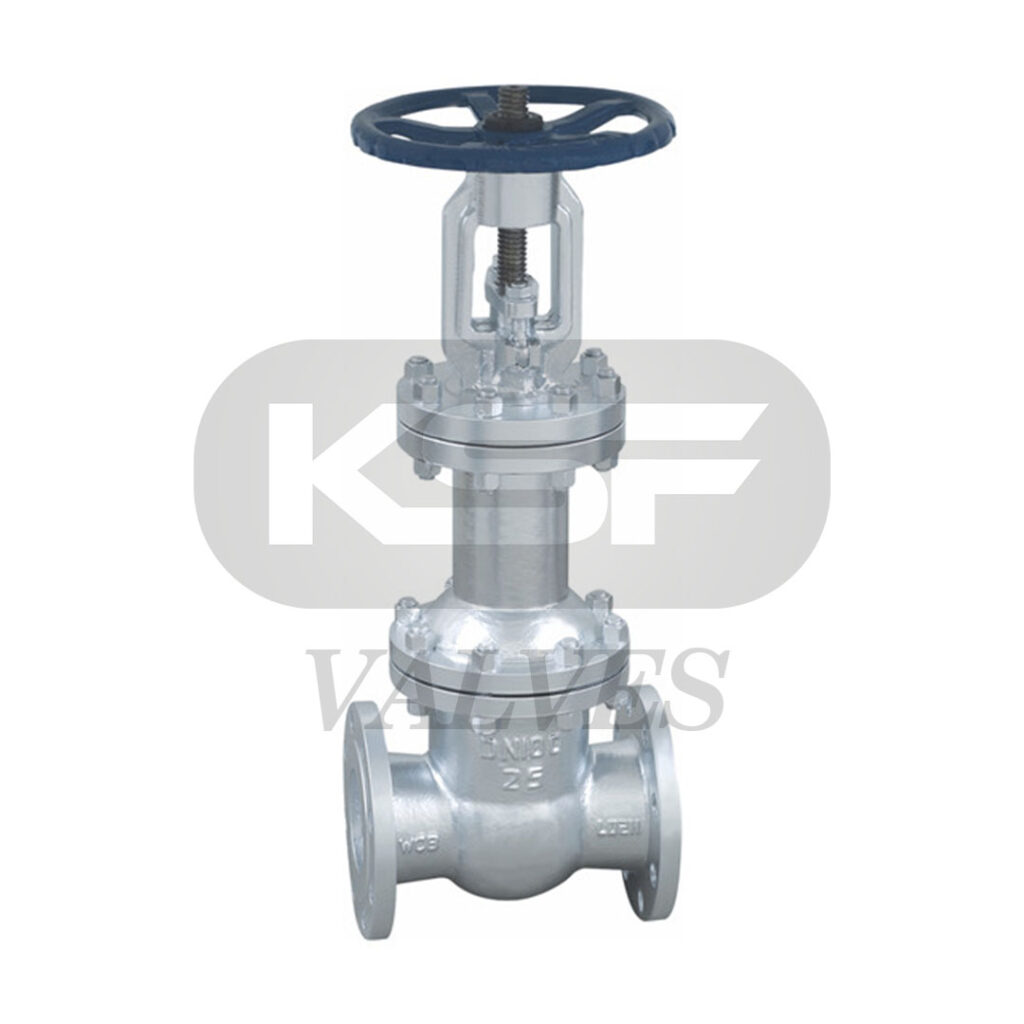
Bellows Sealed Gate Valves
Bellow seal gate valves feature a welded metallic bellows that ensures complete stem sealing and eliminates gland leakage. This design provides long-lasting durability, smooth operation, and zero emission performance. The robust construction and precision engineering make these valves ideal for reliable shutoff and extended service life with minimal maintenance.
Design and Construction:
• Bellows sealed gate valves feature a bellows assembly that provides a static seal between the valve stem and the bonnet, preventing leakage of the process fluid to the environment.
• The bellows assembly typically consists of a metal bellows made from corrosion-resistant materials (such as stainless steel) that are welded or clamped to the stem and bonnet.
• The bellows assembly protects the valve stem from the process fluid, preventing corrosion and extending the valve’s service life.
Materials of Construction:
• Body and bonnet materials: Bellows sealed gate valves are typically made from forged or cast steel materials such as carbon steel, stainless steel, or alloy steel to withstand high-pressure and high-temperature conditions.
• Bellows materials: The bellows assembly is constructed from corrosion-resistant materials such as stainless steel (e.g., ASTM A316L) or other alloys suitable for the process fluid and operating conditions.
Standards and Certifications:
• Bellows sealed gate valves are designed and manufactured in accordance with industry standards such as API 600 or API 602 (for forged steel valves), ASME B16.34 (for valves), and API 598 (for valve inspection and testing).
• They may also comply with various international standards and certifications, depending on the application requirements and the region of use.
KSF Valves Pvt. Ltd.
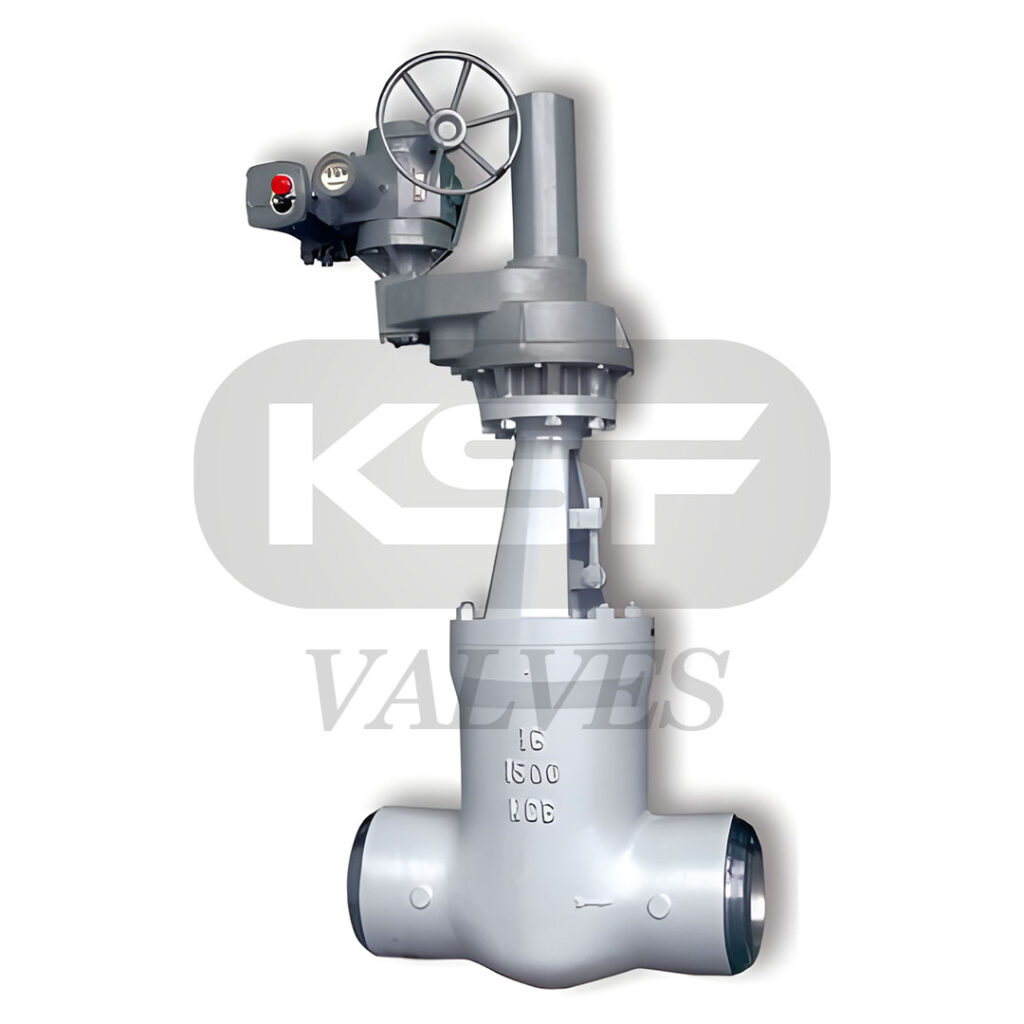
Pressure sealed Gate Valves
Pressure seal gate valves are built for high-pressure, high-temperature services where reliable sealing is essential. Their pressure-energized bonnet design enhances tightness as system pressure increases, ensuring zero leakage. Compact and robust in construction, these valves offer easy maintenance and long service life in demanding conditions.
Design and Construction:
• Pressure sealed gate valves feature a unique design that relies on internal pressure to enhance the sealing integrity of the valve. The pressure seal bonnet is designed to provide a metal-to-metal seal between the bonnet and the valve body when subjected to internal pressure, eliminating the need for additional gaskets.
• The valve body and bonnet are typically constructed from forged or cast steel materials such as carbon steel, stainless steel, or alloy steel to withstand high-pressure and high-temperature conditions.
• Pressure sealed gate valves are typically designed for bolted bonnet or welded bonnet construction, depending on the application requirements.
Materials of Construction:
• Body and bonnet materials: Pressure sealed gate valves are typically made from forged or cast steel materials such as carbon steel, stainless steel, or alloy steel to withstand high-pressure and high-temperature conditions.
• Gate and seat materials: Gate valves may have gates and seats made of materials like stainless steel, carbon steel, or special alloys to provide corrosion resistance and wear resistance.
Standards and Certifications:
• Pressure sealed gate valves are designed and manufactured in accordance with industry standards such as API 600 or API 602 (for forged steel valves), ASME B16.34 (for valves), and API 598 (for valve inspection and testing).
• They may also comply with various international standards and certifications, depending on the application requirements and the region of use.
KSF Valves Pvt. Ltd.
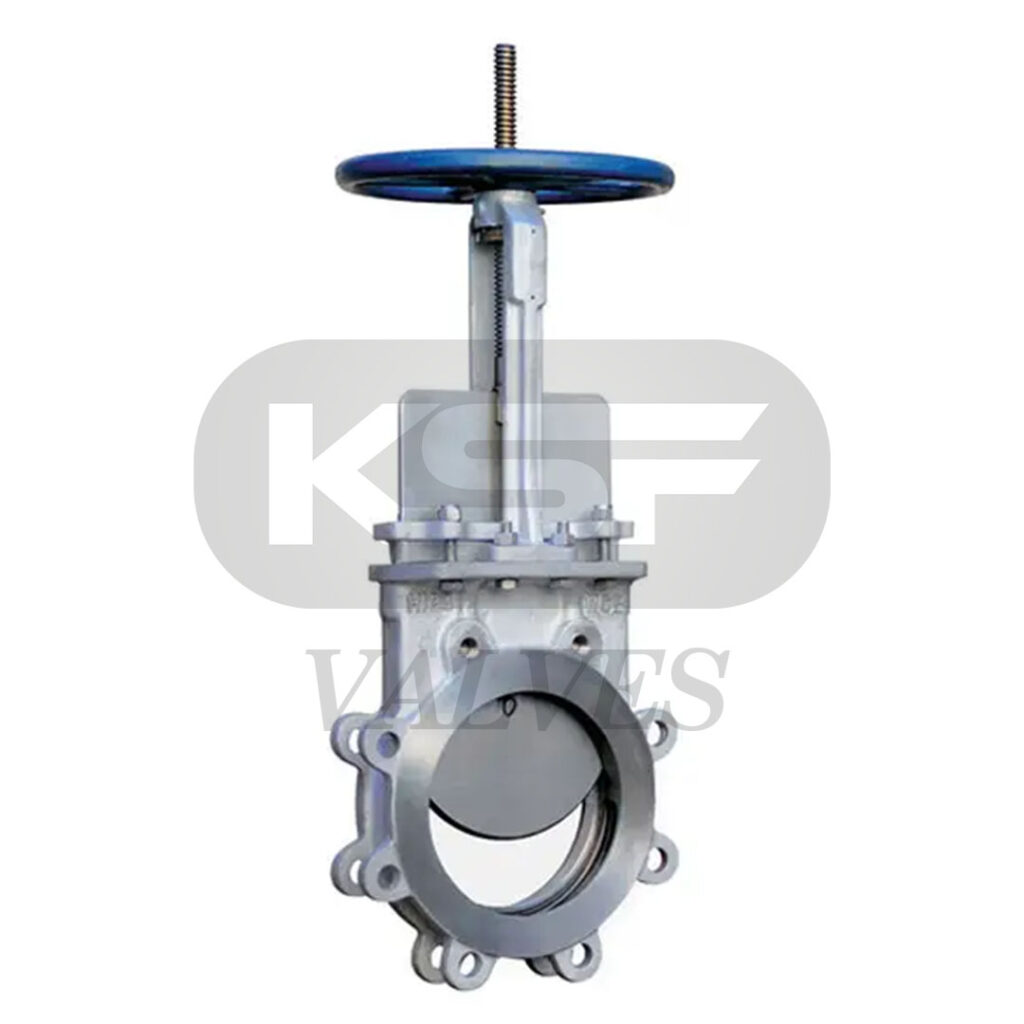
Knife Gate Valves
Knife gate valves are designed for reliable shutoff in slurries and viscous or solid-laden fluids. The sharp-edged gate cuts through media smoothly, ensuring minimal clogging, low-pressure drop, and dependable performance in tough industrial conditions.
Design and Construction:
• Knife gate valves consist of a valve body with an inlet and an outlet, and a gate mechanism that moves across the flow path to control the flow of fluids containing solids.
• The gate is typically made of stainless steel or other corrosion-resistant materials and features a sharp-edged design to cut through solid particles in the fluid stream.
• Knife gate valves are available in various designs, including wafer-style (between flanges), lug-style (flanges drilled and tapped), and flanged ends.
Applications:
• Knife gate valves are commonly used in industries such as wastewater treatment, pulp and paper, mining, chemical processing, and food and beverage processing.
• They are particularly well-suited for handling slurries, viscous fluids, and fluids containing solids or fibrous materials.
• Common applications include slurry isolation, tank drain lines, pulp stock lines, bulk handling systems, and effluent treatment plants.
When selecting knife gate valves for a specific application, it’s essential to consider factors such as valve size, materials of construction, actuation method, and sealing requirements to ensure optimal performance and reliability. Additionally, proper installation and maintenance are important to maximize the lifespan of the valve and prevent issues such as leakage or blockages.